
What Are Excavator Work Injuries?
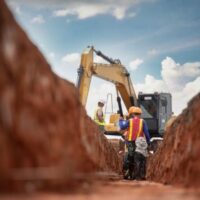
In certain types of construction work, trenching and excavation are necessary to complete the job. According to the Occupational Safety and Health Administration (OSHA), trenching and excavation work are two of the most dangerous types of jobs that exist in the already dangerous construction industry. Excavation and trenching work are related but different from one another. As OSHA explains, excavation is a term used to describe “any man-made cut, cavity, trench, or depression in the earth’s surface formed by earth removal.” A trench, then, is a type of excavation. As OSHA explains, a trench is “a narrow excavation made below the surface of the ground,” and its depth is typically larger than its width.
When excavation-related injuries occur, they can involve cave-ins for construction workers within an excavation area, and they can also involve the various types of heavy machinery used to perform excavation work, known as excavators. What should you know about excavator work injuries in Maryland? Consider the following information from our Maryland construction worker injury lawyers.
Types of Excavators Used on Construction Sites
Excavators are heavy machines that are used to lift and move earth that is removed from the ground. Generally speaking, they include a bucket and an arm, with a rotating cab on movable tracks or wheels. Within the larger category of excavators, there are specific types of excavators that are typically used for specific kinds of excavation work in construction. Those include the following, for example:
- Crawler excavators, which are large excavators that run on tracks and are usually used for heavy-duty work related to trench digging and mining, as well as landscape grading;
- Wheeled excavators, which are also large excavators like crawler excavators but run on wheels (making them faster but less stable) and are often used for heavy-duty road work;
- Long reach excavators, which has a particularly long arm and boom section and are often used in demolition work that can otherwise be difficult to reach;
- Skid steer excavators, which are smaller and run on wheels, and are used in construction jobs that require complex turns and excavation in narrower areas;
- Dragline excavators, which are especially large and created onsite with a hoist rope and bucket system, and are used for canal excavation and other very large projects; and
- Mini excavators, which are the smallest and lightest of the excavators and are used in smaller spaces and even in indoor excavation work.
Common Causes of Construction Site Accidents Involving Excavators
Accidents involving excavators can happen in various ways, including some of the following:
- Excavator tilts or tips due to unstable conditions, which can result in injuries to the operator or others nearby;
- Bucket strikes a construction worker on the ground or in a trench or other excavation area;
- Excavator runs over or backs over a construction worker on site;
- Arm or bucket strikes a nearby power line;
- Operator falls from excavator; or
- Excavator causes a cave-in at a site where construction workers are engaged in trenching work on the ground.
Contact a Maryland Construction Accident Work Injury Lawyer for Help with Your Workers’ Compensation Claim
If you or someone you love got hurt in a construction site accident involving an excavator, it is important to speak with an experienced Maryland construction worker accident and injury attorney at the Law Offices of Steinhardt, Siskind and Lieberman, LLC about seeking workers’ compensation benefits. Contact our firm today to find out more about how we can assist you.
Source:
osha.gov/sites/default/files/publications/OSHA2226.pdf