
Workers’ Compensation Schedule in Maryland for Amputation Injuries
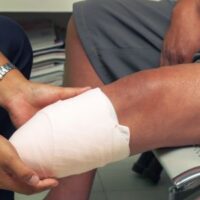
Serious workplace injuries can result in limb amputations. Sometimes these accidents result in traumatic amputations, which Orthotics and Prosthetics in Rehabilitation defined as “an injury to an extremity that results in immediate separation of the limb or will result in loss of the limb as a result of an accident.” Workplace accidents can also result in the “traumatic loss of a limb,” in which the severity of the injury might not be immediately clear, or might not occur instantaneously with the accident, but the accident ultimately requires the amputation of the limb. While these injuries tend to be most common among men, and younger men in particular, they can happen to anyone regardless of gender or age. Both types of amputation injuries occur in workplaces in Maryland, particularly those that involve work with heavy machinery, sharp tools or power tools, and motor vehicles.
When an amputation injury arises out of and occurs in the course of a person’s employment, they can be eligible for workers’ compensation benefits. Not only do workers’ compensation benefits cover the employee’s necessary medical care and a percentage of their lost wages, but these benefits also provide a certain amount of disability benefits, and for a particular duration of time, for the permanent partial disability that has resulted from the amputation. Our workers’ compensation attorneys in Maryland can provide you with more information.
Common Types of Jobs Where Amputation Accidents and Injuries Occur
Accidents that result in traumatic amputations, or that cause crush injuries and other forms of physical trauma that ultimately require an amputation, can occur in various types of industries. Some of the most common types of jobs in which workers get hurt and have a permanent partial disability due to an amputation include the following:
- Construction work involving the use of heavy machinery, saws, and other power tools;
- Warehousing work involving heavy machinery;
- Motor vehicle accidents among delivery drivers;
- Carpentry work involving saws and other power tools;
- Deli work involving powered food slicers and meat grinders;
- Printing work involving traditional printing presses;
- Airline baggage handling work involving the operation of heavy machinery and lifting of heavy objects; and
- Manufacturing work involving powered conveyor belts.
Partial Permanent Disability Payments for Amputation Injuries
Under Maryland law, partial permanent disability compensation is paid according to the following schedule for amputation injuries:
- 100 weeks for loss of a thumb;
- 40 weeks for loss of a 1st finger (the index finger);
- 35 weeks for loss of a 2nd finger;
- 30 weeks for loss of a 3rd finger;
- 25 weeks for loss of a 4th finger (pinky or little finger);
- 40 weeks for the great toe or big toe;
- 10 weeks for a toe other than the great toe;
- 250 weeks for a hand;
- 300 weeks for an arm;
- 250 weeks for a foot;
- 300 weeks for a leg; and
- 250 weeks for an eye.
The law further clarifies that amputation at certain parts of the arm or leg are considered to be the loss of the hand, foot, arm, or leg in full.
Contact a Maryland Workers’ Compensation Lawyer for Assistance with Your Amputation Claim
If you experienced an amputation injury after a workplace accident, one of the experienced Maryland workers’ compensation lawyers at the Law Offices of Steinhardt, Siskind and Lieberman, LLC can help you to seek compensation. Contact our firm today for assistance.
Sources:
mgaleg.maryland.gov/mgawebsite/Laws/StatuteText?article=gle§ion=9-627&enactments=false
sciencedirect.com/topics/medicine-and-dentistry/traumatic-amputation